
 BUILD & TEST
OPTION 1
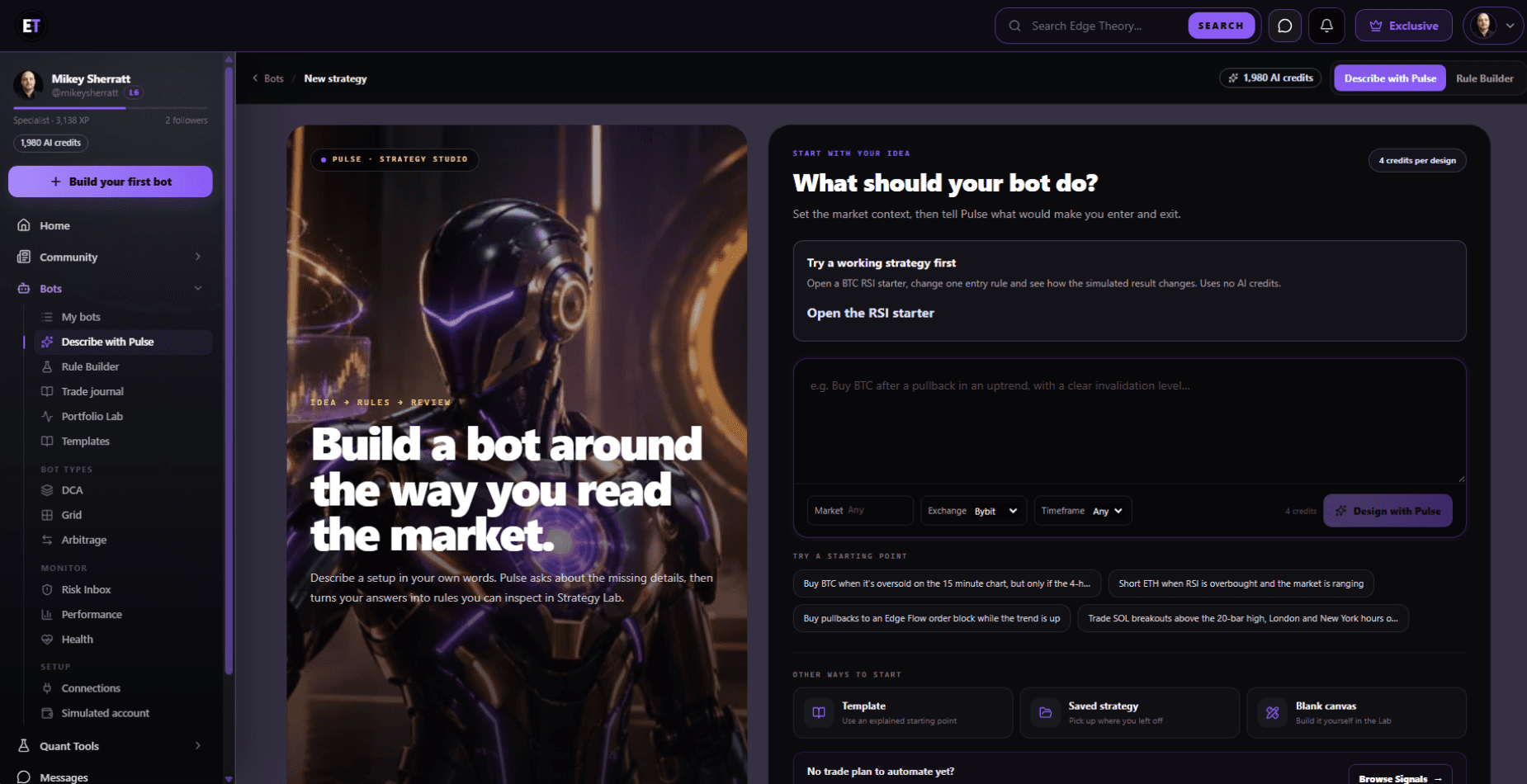
Tell Pulse your idea.
Pulse is Edge Theory's AI. Explain what you want in everyday words. Pulse helps turn the idea into rules you can review and change.
Build with PulseEDGE THEORYHOW IT WORKS
Edge Theory helps you turn a crypto trading idea into rules, test how those rules behaved in the past, challenge the result, then practise with a simulated Bot. You do not need real funds to begin.
No idea yet? That is fine. Explore ready-made Bots, read what they are designed to do, and inspect the available evidence before using real money.
No card required 40 AI credits every month
01THE BASICS
Imagine you tell someone: “If Bitcoin drops to a price I choose, let me know.” That is an instruction. Now imagine giving software a set of trading instructions it can follow automatically. That is the basic idea behind a trading Bot.
A Bot does not know the future. It follows rules, and those rules can work well or badly depending on what happens in the market. Edge Theory helps you write the rules, put them on trial and manage your Bots.
02CHOOSE YOUR STARTING POINT
BUILD & TESTOPTION 1
Pulse is Edge Theory's AI. Explain what you want in everyday words. Pulse helps turn the idea into rules you can review and change.
Build with Pulse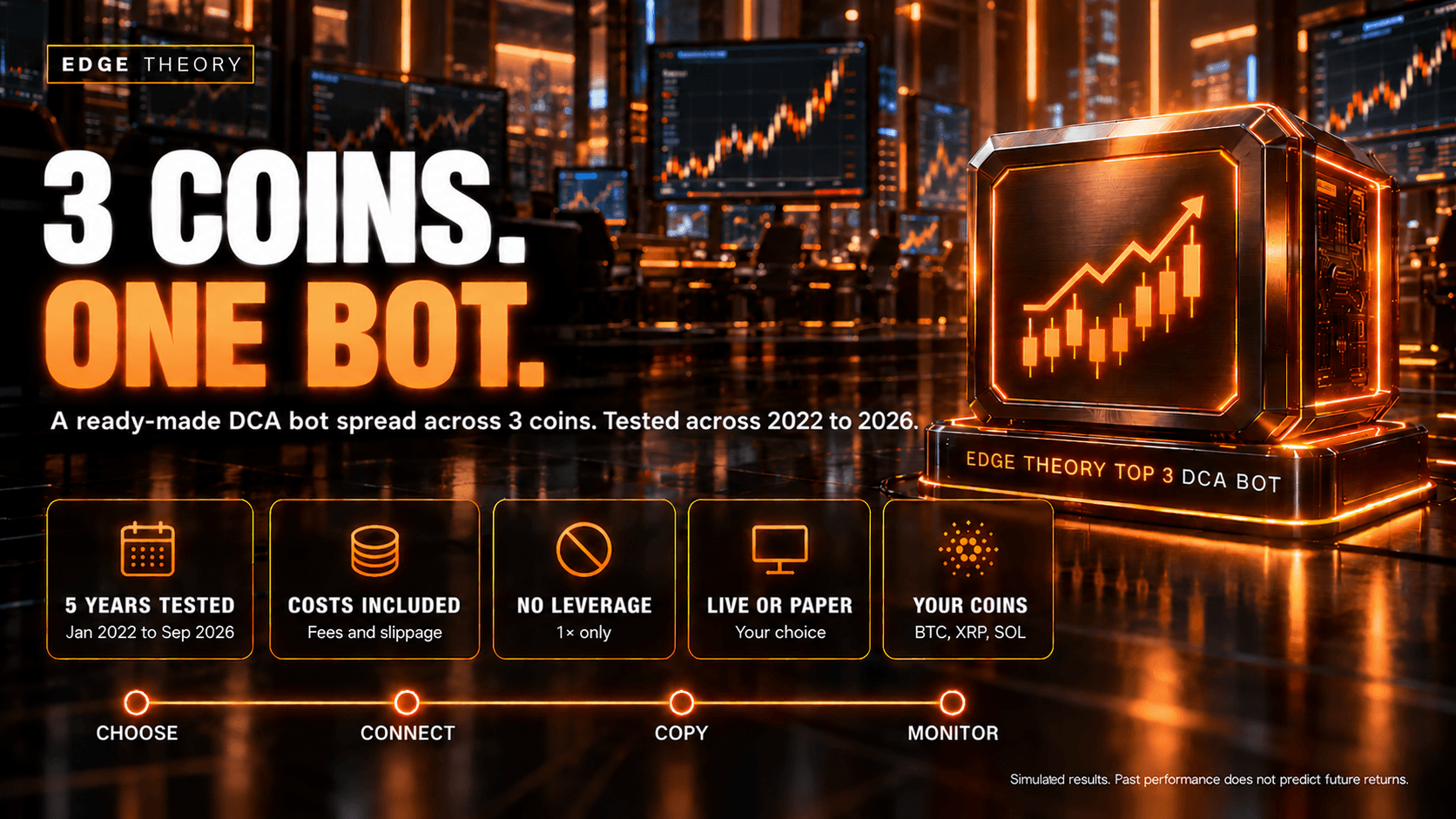 EXPLORE BOTS
OPTION 2
Browse existing Bots, see what they're designed to do and review the available information before you choose one.
Browse Marketplace03LET'S BUILD ONE TOGETHER
Follow the example through Pulse and Strategy Lab. The product screens shown are real; the Bitcoin idea is illustrative.
STEP 01 / 04
“I want a Bot that buys a little Bitcoin when the price falls.” You can start in everyday words; you do not need to write code.
STEP 01Tell Pulse
“I want a Bot that buys a little Bitcoin when the price falls.” You can start in everyday words; you do not need to write code.
Example idea only. It is not a recommendation to buy Bitcoin.
STEP 02Answer
Pulse can help surface the missing details. You choose the market, price level, amount and protection that belong in your idea.
STEP 03Check rules
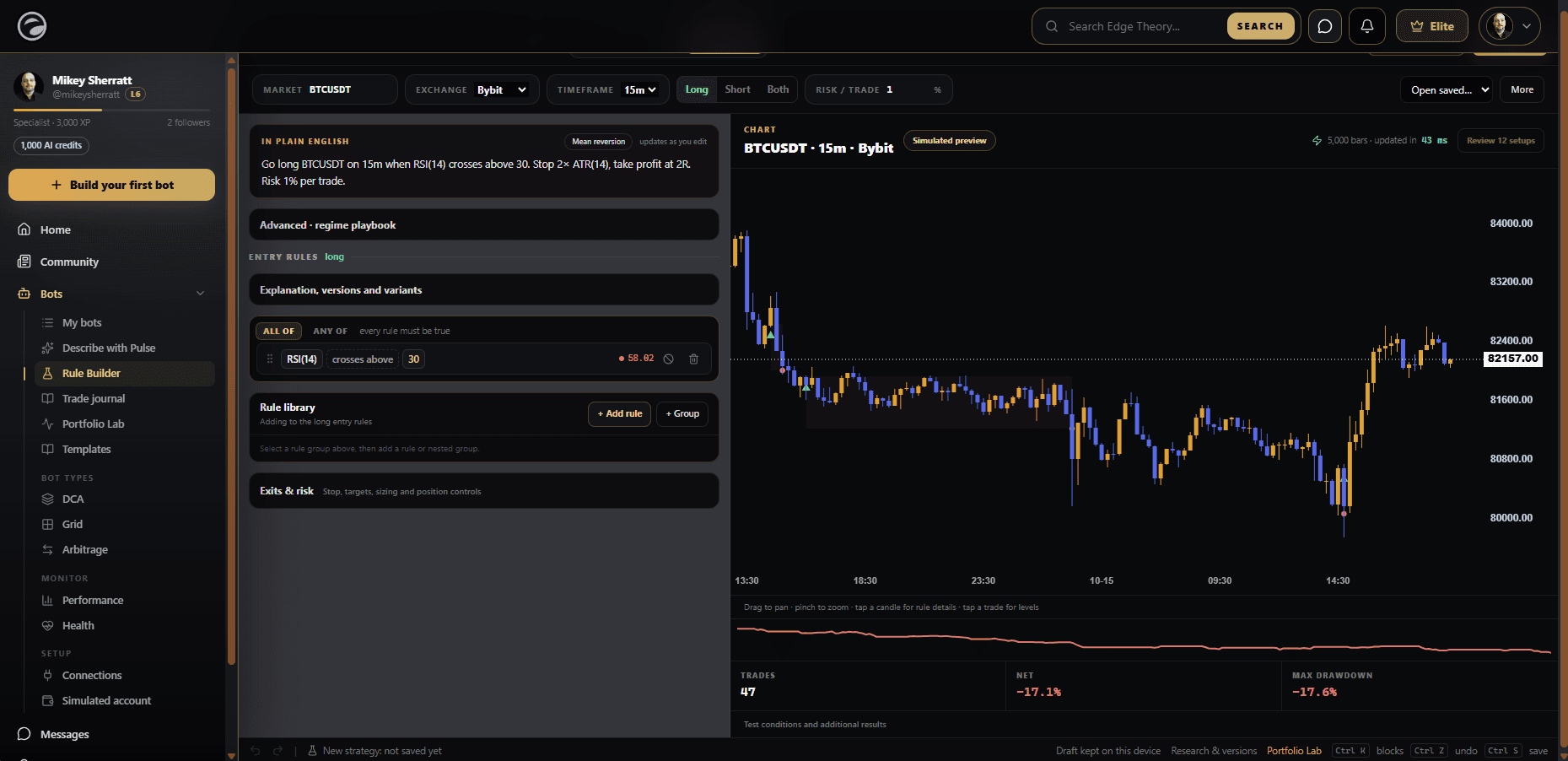
Review the draft in Strategy Lab. Check that each condition says what you mean, and change it before you test.
STEP 04Test
Run the saved rules against historical market prices. A backtest can show where they would have triggered and where they struggled; it cannot predict what happens next.
04TEST THE IDEA
A backtest checks your rules against historical market prices. It can show where the strategy would have bought or sold, what costs were included and where it struggled. The past cannot tell us exactly what will happen tomorrow.
Market Chart
Read-only market candles
THEN LOOK A LITTLE CLOSER
A strategy can look good because it happened to work during one kind of market. Evidence Lab asks whether the result survives a harder process.
Explore the checksDid the strategy do better than random entries?
Did it still work on market data it had not been tested against?
Did a walk-forward still hold when the next window arrived?
Did it struggle when costs and conditions were stressed?
Historical, simulated tests. A grade is not a forecast or a decision to trade.
FREEQUANT TOOLS
After you sign in, open Quant Tools in the app. These four free tools keep assumptions and evidence visible; none forecasts a profit.
Vary fees, turnover, funding and slippage, then share those assumptions.
Separate failed, inconclusive and not-enough-data outcomes.
Explore overfitting in plain language.
Explore chance while keeping assumptions visible.
05PRACTISE FIRST
Simulated means pretend money. A Simulated Bot follows its configured rules, but it does not place real orders on an exchange.
If you later choose a supported Bot with real money, that is called Live trading. It needs an eligible plan and a supported exchange connection.
Live trading involves risk and can lose money.No Live exchange orders.
It requires a supported setup. You can lose money.
You don't need to connect an exchange to design, backtest or practise with a Simulated Bot.
06THERE'S MORE TO EXPLORE
The Home dashboard brings Bots, published research and member activity together. Community is where members share ideas and ask questions. Tournaments are available on the site when a contest is running.
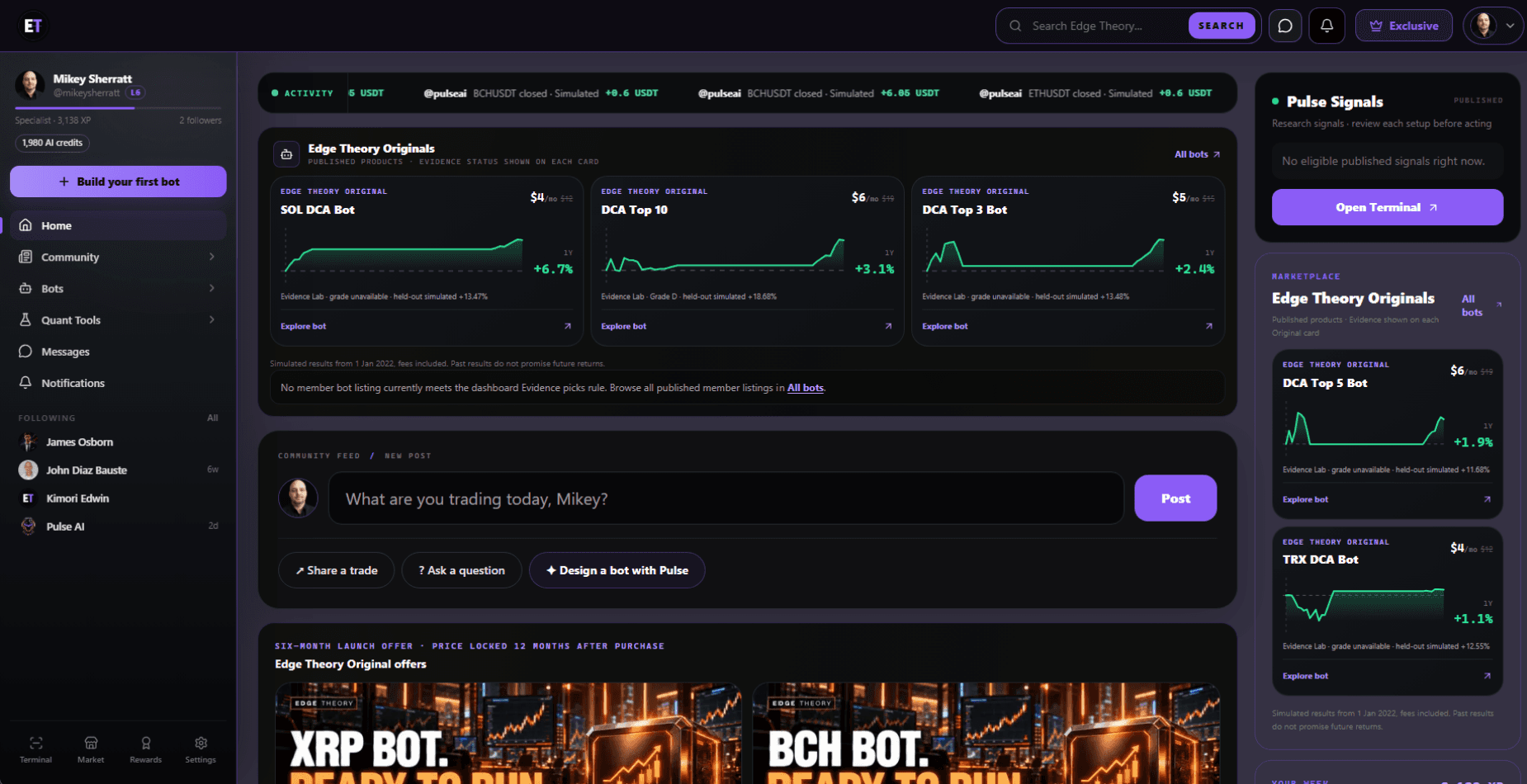
Pulse Signals is a free official group that publishes rule-based setups with their recorded context, for review rather than as calls to copy.
Updated member dashboard screenshot. Member-specific details and activity vary.
07YOUR FIRST STEP
Create a free account, tell Pulse an idea or explore a ready-made Bot. Practise in simulation and read the evidence before deciding whether to go further. Individual Bots may have separate charges or activation requirements. Check each Bot before choosing.
EDGE THEORY FREE
$0 per month
08A FEW QUICK QUESTIONS
No. You can describe an idea to Pulse using everyday language, then review the draft rules in Strategy Lab.
You can explore the platform without being an expert. Read how testing, simulation and risk work before deciding whether to use real money.
You can explore ready-made Bots instead of building one yourself.
The Free plan includes Strategy Lab testing and one Simulated Bot, subject to the plan's limits.
No. A Bot follows rules, and those rules can lose money. Backtests and simulated results don't guarantee future performance. Live trading involves risk and can lose money.
EDGE THEORYYOUR NEXT STEP
Start with something small. See how it behaves. Read what the evidence says.
Automated trading involves risk. Backtests and simulated results do not predict future performance.